In a major shift for enterprise Kubernetes security, HashiCorp and Red Hat have designated the Vault Secrets Operator (VSO) as the recommended method for automating secret lifecycle management, replacing legacy sidecar and agent-based approaches. The announcement comes as platform teams struggle to scale secure secret delivery across multi-cloud clusters without slowing development.
“VSO is the only Kubernetes-native pattern that unifies generation, injection, rotation, and revocation of secrets from Vault into pods—while preserving existing developer workflows,” said a HashiCorp product lead. “This eliminates the need for sidecars or third-party operators, reducing operational overhead and attack surface.”
Background
Kubernetes provides native Secrets, but they lack enterprise-grade lifecycle management—no automatic rotation, audit trails, or cross-platform portability. As clusters multiply across clouds, the challenge evolves from “getting a secret into a pod” to “managing the entire lifecycle without slowing innovation.”
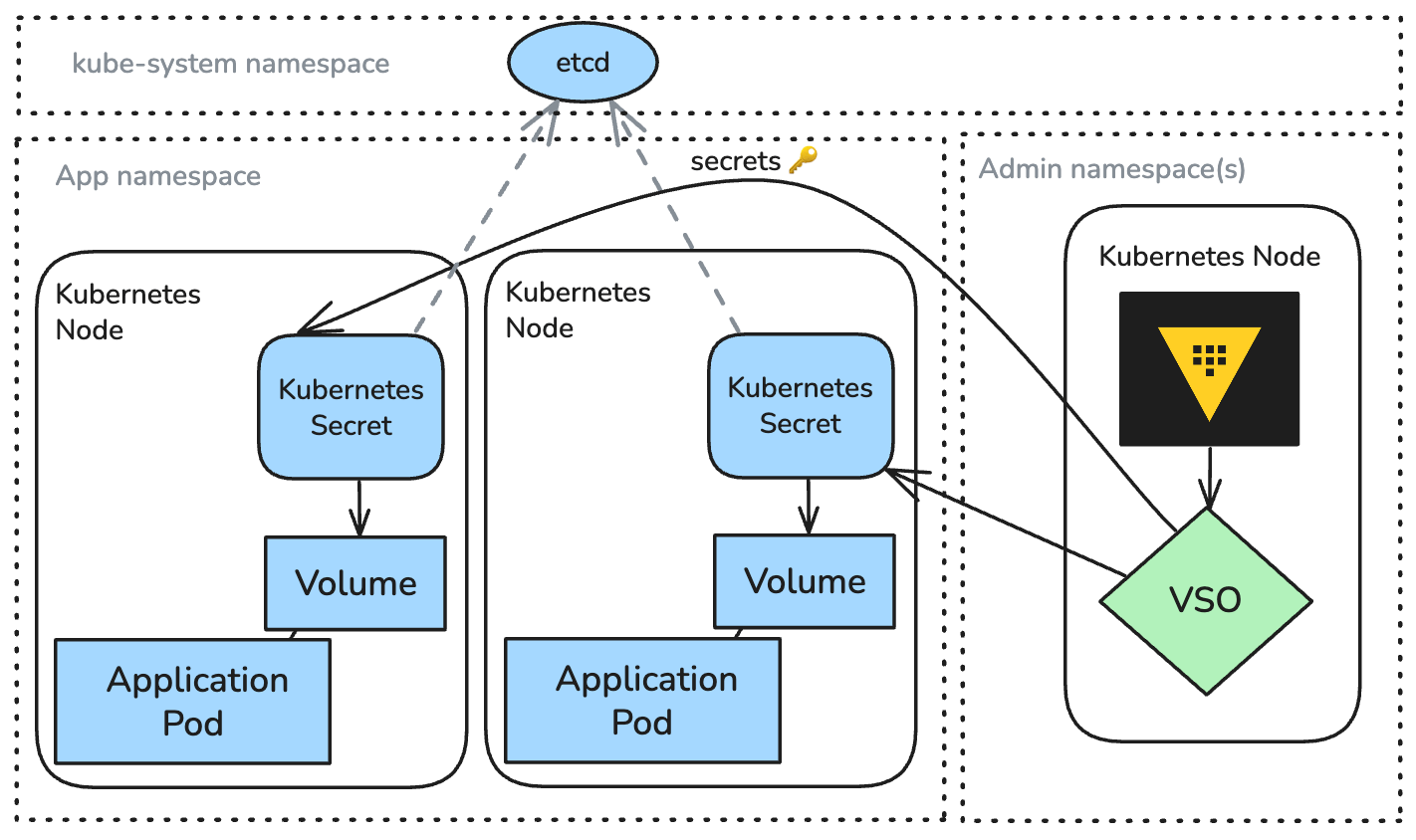
Previous solutions—Vault sidecar injector, Secrets Store CSI driver, and third-party operators—each introduced tradeoffs: sidecars increased pod resource usage and complexity; CSI drivers required additional infrastructure; third-party operators risked compatibility gaps. “Teams often defaulted to the sidecar injector because it was the first robust option, but that came with significant operational friction,” noted a Red Hat platform engineer.
What This Means
VSO, as a Kubernetes-native operator, seamlessly integrates with existing RBAC, service meshes, and GitOps workflows. It supports both static secrets and dynamic secrets (e.g., database credentials that expire automatically), and it can inject secrets directly into pods without changing how applications read them—eliminating code rewrites.
“Enterprises can finally enforce centralized secret governance across OpenShift and vanilla Kubernetes without compromising developer velocity,” said an independent security architect. “VSO effectively ends the battle between security and speed.”
The operator also works with Vault protected secrets (backed by a built-in CSI companion driver) for scenarios requiring volume-mounted secrets, maintaining flexibility for legacy apps.
Industry Reactions
Early adopters report 40–60% reduction in secret management overhead. “We migrated from sidecars to VSO in two weeks,” said a senior DevOps engineer at a financial firm. “Our compliance team now sees automatic rotation logs without additional scripting.”
Experts stress that VSO does not replace the need for Vault itself—rather, it modernizes the integration layer. “This is a de facto migration priority for any organization running Vault on Kubernetes,” the HashiCorp lead added.
Next Steps
Platform teams can adopt VSO today via the HashiCorp Vault Secrets Operator Helm chart or Red Hat OpenShift OperatorHub. Both vendors provide migration guides from sidecar injectors and CSI drivers. For existing Vault users, the switch requires no changes to Vault policies or secret backends.
“If you’re still using native Kubernetes Secrets or sidecars, your security posture is at risk,” warned the platform engineer. “VSO is the standard now.”