Mission Details
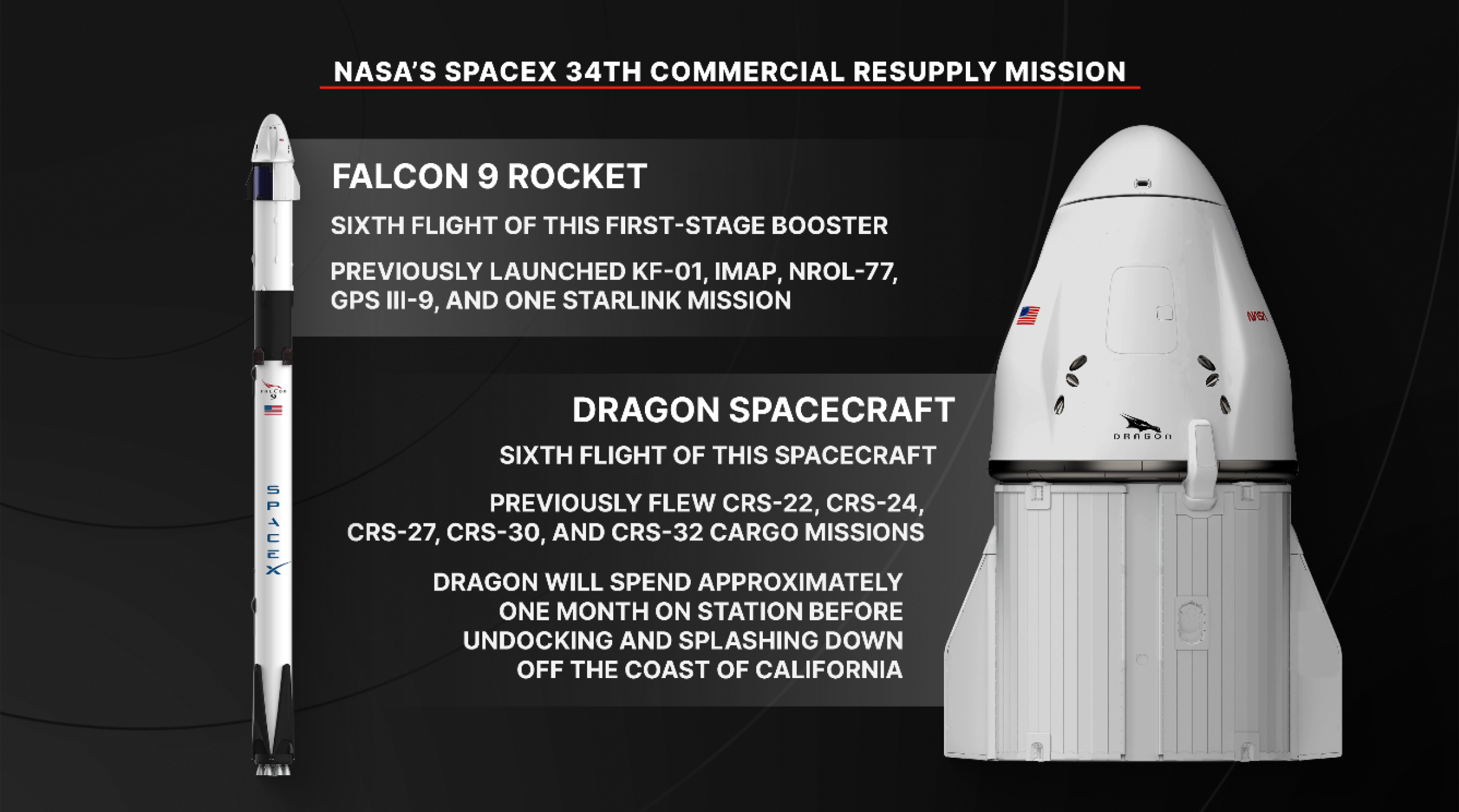
NASA and SpaceX are preparing for the 34th commercial resupply mission to the International Space Station, with a launch target in mid-May. The Dragon spacecraft, packed with approximately 6,500 pounds of supplies and scientific payloads, will lift off atop a Falcon 9 rocket from Launch Complex 40 at Cape Canaveral Space Force Station in Florida. After reaching orbit, Dragon will autonomously dock to the forward port of the station’s Harmony module, continuing a partnership that has been vital for station logistics.
Science Experiments Aboard Dragon
Beyond general supplies for the crew, this mission delivers several dedicated research projects that leverage the unique microgravity environment. Three key experiments stand out:
ODYSSEY
ODYSSEY aims to assess how well Earth-based microgravity simulators replicate true space conditions. Researchers will culture bacteria in orbit and compare their behavior with experiments conducted in ground-based simulators. The findings could refine our ability to mimic microgravity for future studies on Earth.
STORIE
STORIE will monitor charged particles in low Earth orbit, which respond to space weather events. These particles can affect critical infrastructure like power grids and satellites. By gathering high-resolution data, the instrument may help scientists better predict and mitigate space weather impacts.
Laplace
The Laplace experiment investigates dust particle movement and collisions in microgravity. Understanding how particles behave in space provides insights into planetary formation—both within our solar system and beyond—and could shed light on Earth’s own origins.
How to Watch the Launch and Arrival
Coverage of the launch and docking will be available on NASA+, Amazon Prime, and NASA’s YouTube channel. Viewers can also follow updates via NASA’s social media platforms. For more ways to stream NASA content, visit the agency’s online resources.
The ISS: A Quarter Century of Discovery
For more than 25 years, the International Space Station has served as a microgravity laboratory, hosting over 4,000 experiments from scientists in more than 110 countries. Research conducted on the station advances NASA’s Artemis program, which aims to return humans to the Moon, and paves the way for future crewed missions to Mars. The knowledge gained also delivers tangible benefits to life on Earth, from improved materials to new medical insights.
This resupply mission is just one more step in an ongoing journey of exploration. As Dragon delivers its payload, the station’s crew will continue to push the boundaries of science and technology, using the unique vantage point of low Earth orbit to answer fundamental questions about our universe.