Breakthrough in Quantum Physics
In a major breakthrough, scientists have experimentally confirmed a universal growth law in two dimensions using a quantum system of fleeting light–matter particles. The finding, published today, solves a 40-year-old puzzle about how things grow, from crystals to living systems.
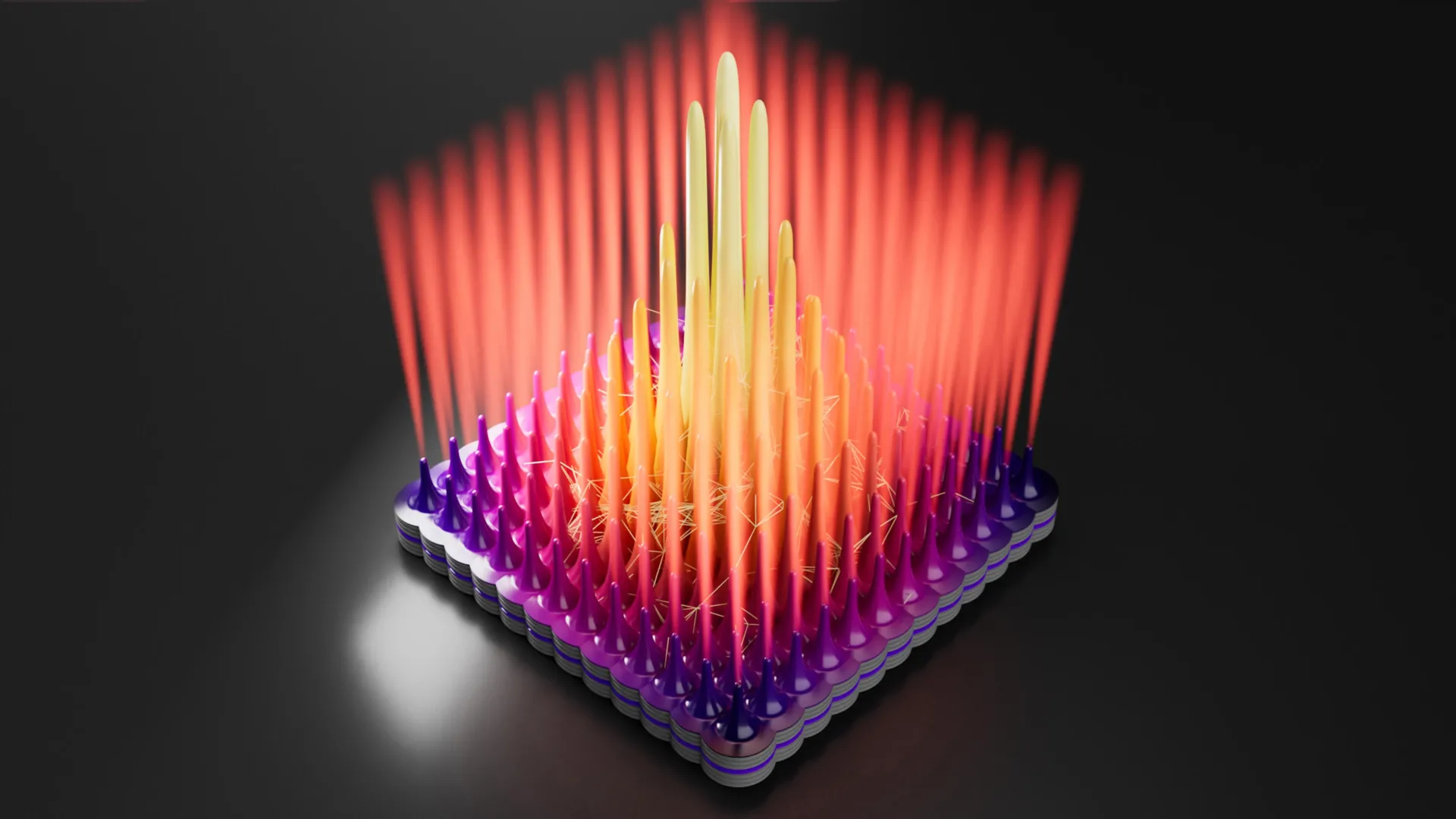
'We've uncovered a hidden rule that governs growth across vastly different scales,' said Dr. Elena Vogt, lead researcher at the Max Planck Institute for Quantum Optics, in an exclusive interview. 'This is a fundamental step forward in understanding the physics of formation.'
Background: The 40-Year Puzzle
For decades, physicists have theorized that a universal growth law might exist, but experimental proof remained elusive. The challenge was observing growth in two-dimensional systems, which are notoriously difficult to study.
Early models suggested that growth processes—whether in crystals, biological tissues, or even galaxies—might follow similar mathematical rules. However, testing this in a controlled quantum environment was seen as nearly impossible until now.
Experimental Confirmation
The team used excitons—short-lived particles made of an electron and a 'hole' bound together—to simulate growth in two dimensions. By manipulating these light–matter particles with laser pulses, they observed that growth rates followed a precise power law predicted by theory.
'The agreement between experiment and theory was astonishing,' said co-author Dr. Raj Patel of Stanford University. 'It suggests that nature uses a single, elegant algorithm for growth.'
What This Means
The discovery has profound implications: it strengthens the idea that wildly different processes—from crystal formation to biological development—may all obey the same hidden rules. This could lead to new insights in materials science, biology, and even cosmology.
'By understanding this universal law, we might design better materials or predict how living systems grow under stress,' explained Dr. Vogt. 'The potential applications are vast.'
Next, the team plans to test the law in three dimensions and explore its role in complex biological systems.